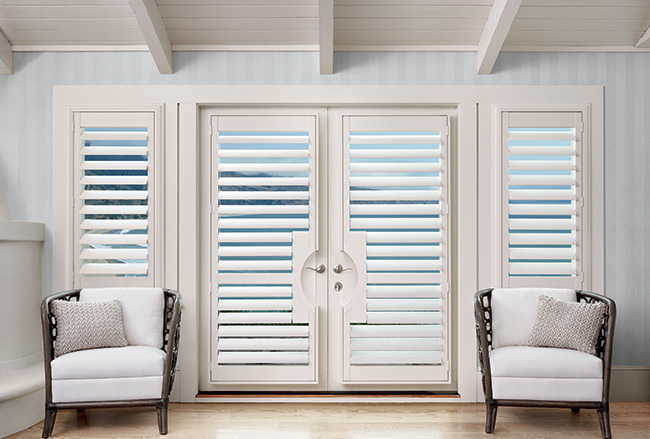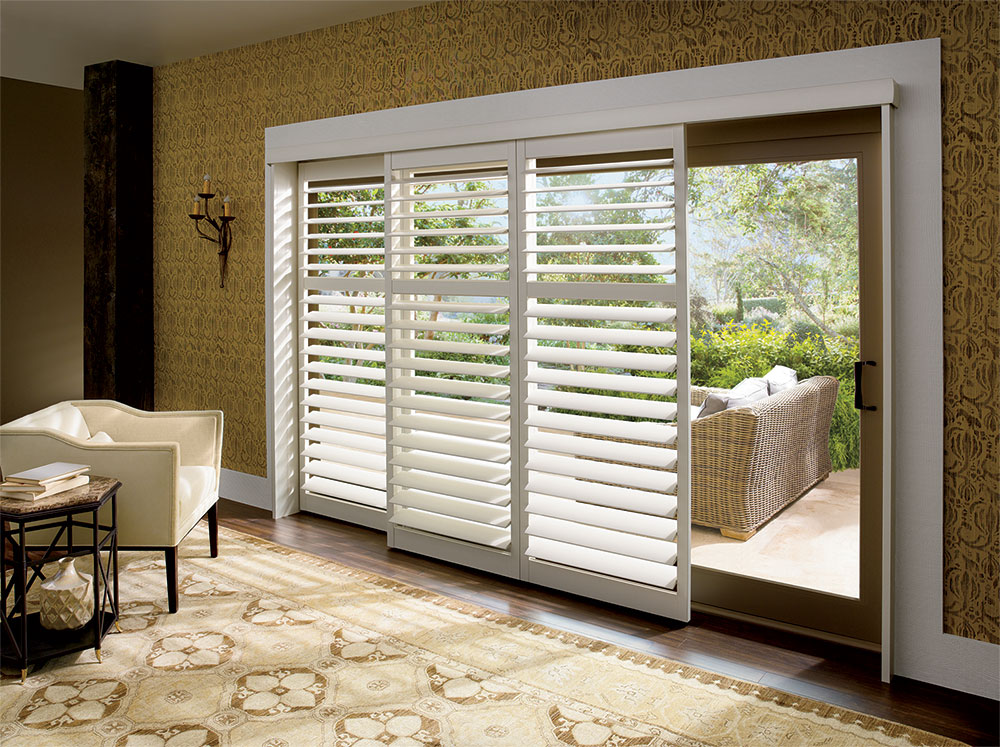
Bi-Fold Shutters For Sliding Glass Doors
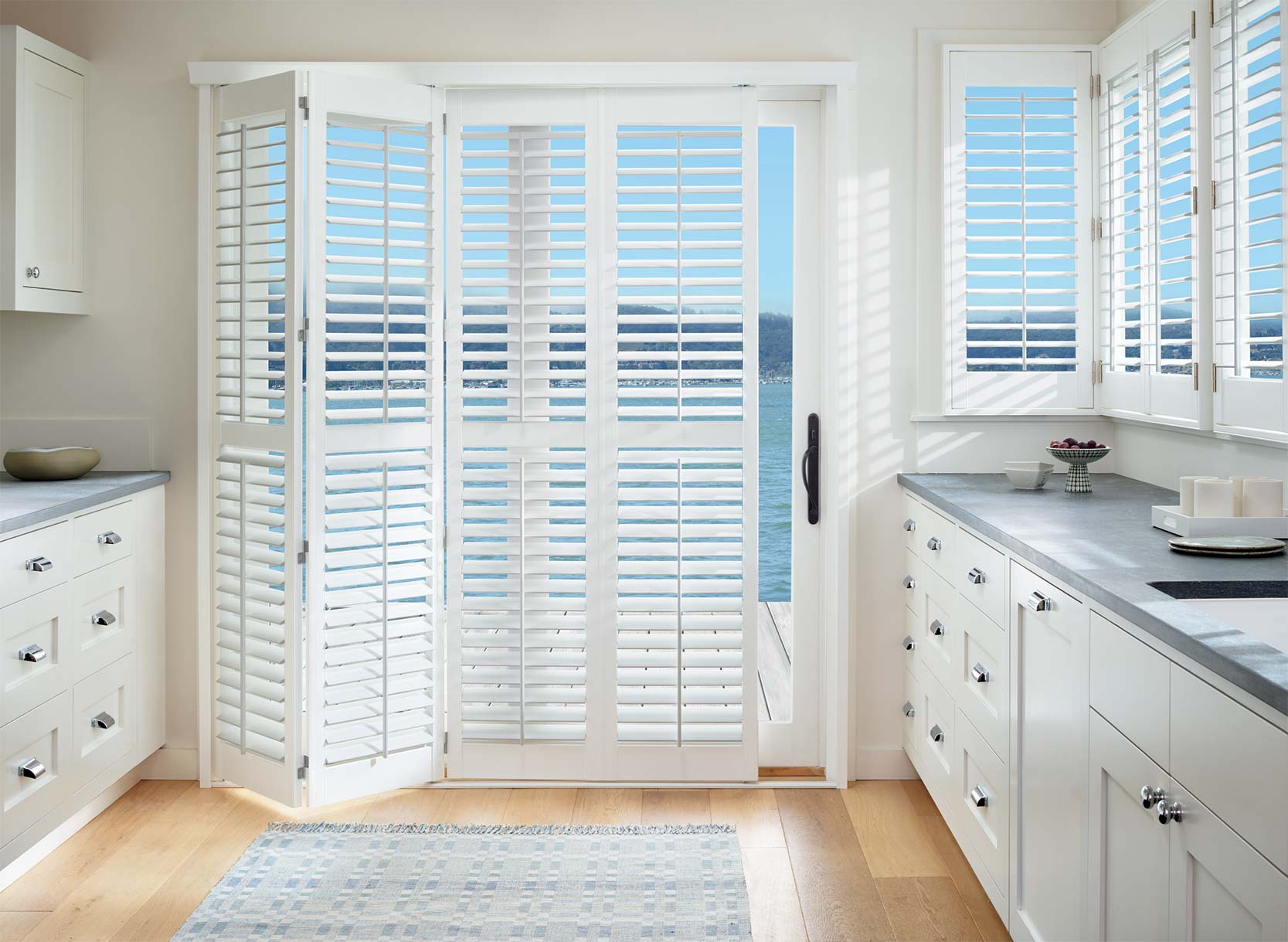
Glass doors — whether sliding patio doors, French doors, or large entry doors with sidelights — present a unique decorating challenge. Standard curtains or blinds can bunch awkwardly, block the door’s operation, or simply look out of place on a wide glass panel. Bi-fold plantation shutters solve this problem elegantly.
Designed specifically to accommodate door openings, bi-fold plantation shutters fold neatly to one or both sides when you need full access, and close smoothly to provide privacy, light control, and a polished look. In Florida, where indoor-outdoor living is a way of life, shutters on glass doors have become one of the most requested window treatment upgrades we install.
How Are Bi-Fold Shutters Mounted on Glass Doors?
Bi-fold plantation shutters for glass doors are mounted using a dedicated door frame — essentially a shutter panel built into its own sturdy frame that attaches directly to the door frame or surrounding wall, completely independent of the door itself.
A top track and bottom pivot pin guide the panels as they fold open and closed, while hinges connect individual shutter panels together in pairs. Because the shutter frame is installed around the door opening rather than on the door itself, the glass door can operate freely without the shutters interfering. Magnetic catches or slide bolts keep the panels neatly in the closed position, and installation typically takes just a few hours by a professional installer.
What Design Options Are Available for Bi-Fold Shutters on Glass Doors?
Yes — and in the Sunshine State, that energy efficiency is crucial. Plantation shutters create a dead-air space between the shutter panels and the glass, acting as an additional layer of insulation against Florida’s intense heat.
When closed with the louvers angled upward, shutters reflect direct sunlight away from the room, reducing solar heat gain and easing the load on your air conditioning system. Studies have shown that interior shutters can meaningfully reduce heat transfer through windows and glass doors, translating to lower cooling costs over time. While shutters won’t replace quality impact-rated glass or weatherstripping, they are a meaningful upgrade to your home’s overall thermal envelope — especially on west- and south-facing doors that take the brunt of afternoon sun.
Is There a Downside to Plantation Shutters on Doors?
The most common consideration is cost — they are a premium product with a higher upfront investment than blinds or curtains.
Reduced door width is another practical reality: when the shutters are folded open, they stack to the side of the doorway, reducing the clearance width slightly — something to keep in mind if you frequently move large furniture or equipment through the opening. Some homeowners also find that the panels, when folded back, can feel a bit bulky in tighter spaces. Finally, cleaning requires more attention than a simple fabric shade — louvers accumulate dust and need periodic wiping, although the vinyl shutters in particular are very easy to maintain. For most homeowners, these trade-offs are minor compared to the aesthetic and functional benefits shutters provide.
What Is the Price Range for Bi-Fold Shutters on Glass Doors?
Bi-fold plantation shutters for glass doors are typically priced per opening. For a standard 6-foot sliding glass door, homeowners in Florida generally invest between $800 and $2,500 installed, depending on several key variables.
Factors that can affect the cost of bi-fold plantation shutters on sliding doors:
- Material: PVC shutters are the most affordable option and excellent for humid Florida environments, typically running $600–$900 for a standard glass door. Composite shutters fall in the mid-range at $800–$1,200, while genuine hardwood shutters command the highest prices, often $1,200–$1,800 or more for the same opening.
- Door size: An 8-foot or 9-foot sliding glass door or a wide set of French doors will cost meaningfully more than a standard 6-foot opening — expect to add $150–$500 for oversized openings.
- Custom color or finish: A standard white or off-white finish is the most economical choice. Custom paint colors or stained-wood finishes can add $100–$300 to the total.
- Add-ons: Hidden tilt rods, specialty hardware finishes, or motorized operation can add anywhere from $75 to several hundred dollars per opening.